The exhibition “Rules of the Game: How Sport Has Shaped Culture” will be held at “New Manege” as part of the annual conference “Sport and Society: Rules of the Game,” implemented with the support of the National Projects of Russia and the state program “Sport of Russia.” The initiative’s partner is the Federal State Budgetary Institution “State Museum of Sport.”
The exhibition will trace how sport has shaped society over the centuries — fr om initiation rituals in primitive times and the development of a harmonious personality in Antiquity, to Olympism, mass, and adaptive sport today.
This is not a history of individual sport but a history of cultural ideas about the human being, the body, and society. From Antiquity to the 20th
century, the development of sport was uneven: its meanings, goals, and roles in people’s lives changed throughout history. The exhibition traces these shifts — from ancient rituals and gymnasiums to medieval knightly tournaments, early modern ball games, and contemporary hybrid sports.
Each section of the exhibition is aligned with one of the European theories of the 20th century on the origins of sport, as well as with modern initiatives — including those supported by the Vladimir Potanin Foundation within the charitable program “Strength of Sport.” This program helps researchers, communities, universities, and non-profit organizations develop projects in which sport becomes a tool for participation, inclusion, and philanthropy.
Director of the Vladimir Potanin Foundation Oksana Oracheva:
The “Power of Sport” program has brought together hundreds of organizations across Russia for several years now — from museums and civic associations to sport schools and inclusive communities. We see how sport fosters trust, mutual support, and engagement — qualities that form the foundation of a sustainable society. It is important for the Foundation to support projects in which sport becomes part of the country's cultural life.
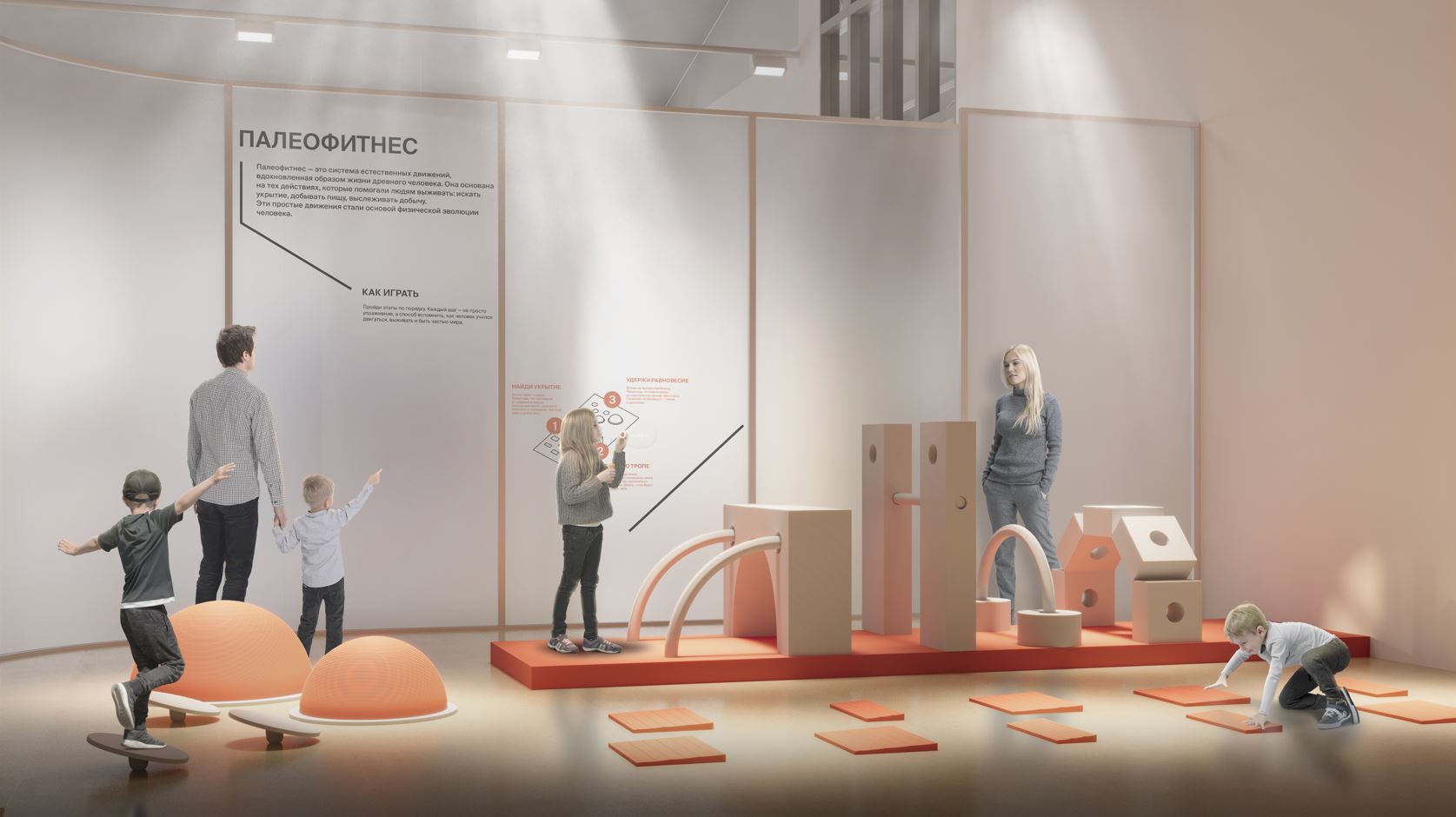
The exhibition is designed as a game in which the viewer becomes a participant. As they move through the hall, visitors can try various activities — from ancient gaming practices to modern sport simulations. The exhibition includes a series of attractions and interactive zones, wh ere sport becomes a tool for exploring oneself.
The exhibition will feature artifacts from the Olympic Collection of Vladimir Potanin — one of the largest private collections dedicated to the history of sport. The section will include Olympic torches symbolizing key milestones in the development of Russian sport and technology. The collection, managed by the Russian International Olympic University, has been displayed in different cities across Russia and abroad since 2019.
One of the exhibition sections is partnered by the Skolkovo Technopark and the Skolkovo Foundation. Visitors will discover innovations from participants of the SportTech Sk accelerator, which brings together innovations in sport and cybersport that are reshaping ideas about training, play, and the capabilities of the human body.
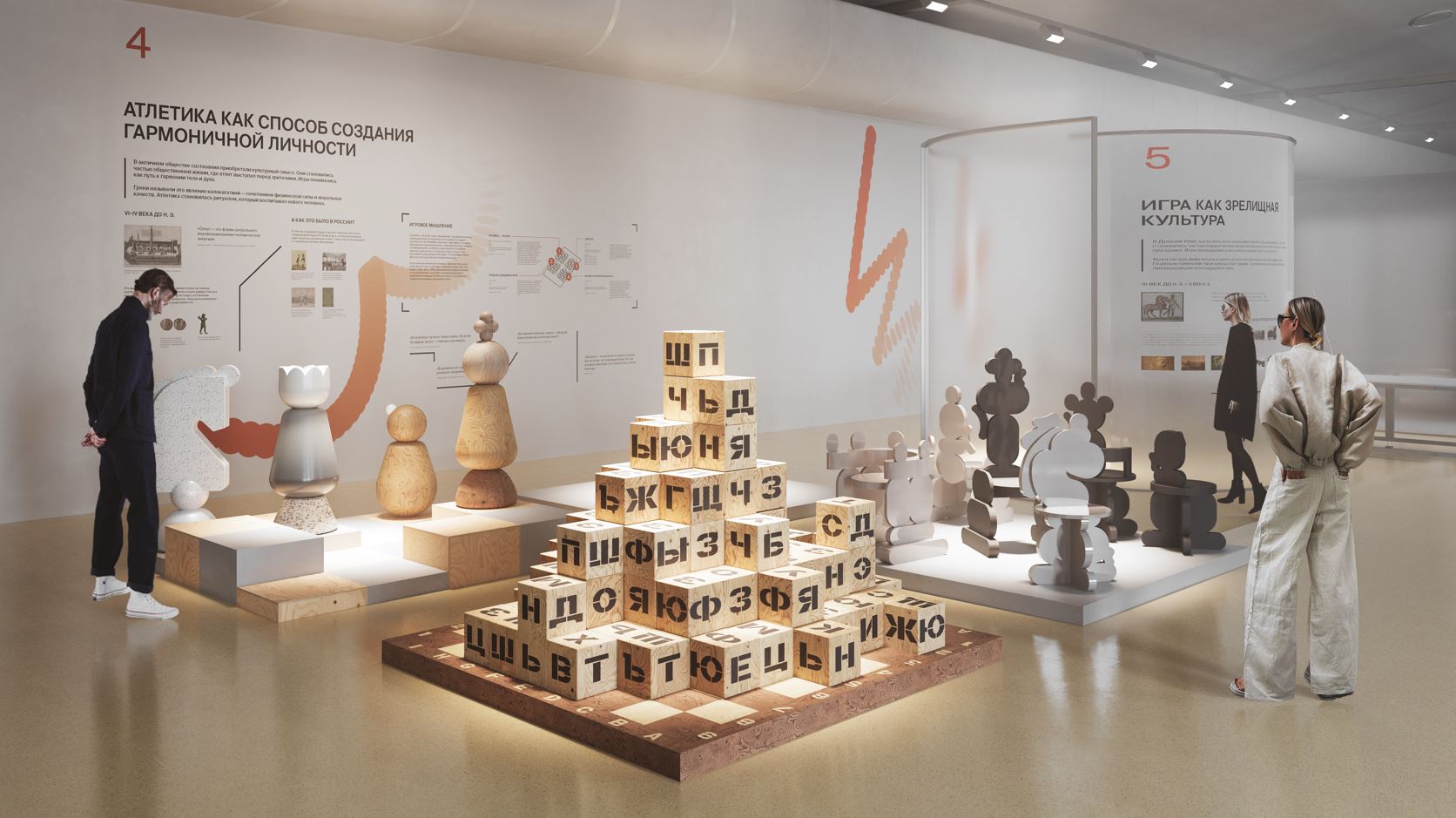
The artistic part of the project includes works by contemporary authors for whom sport becomes a subject for reflection — on movement, the body, and human relationships. Antonina Mazepa, architect and artist, addresses the theme of sport hierarchy, turning the podium into a metaphor for upward movement. A series of art objects on chess as a model of the world were created by Olya Kroytor, performance artist and Kandinsky Prize laureate; Alexey Luka, an artist working with abstraction and architectural forms; Sasha Posokh, architect and artist; and the brand Pärla, combining Swedish design and the tradition of handmade toys. Olga Ptashnik, illustrator whose books have been translated into seven languages, presents an original comic about medieval tournaments — about sport as spectacle, challenge, and play.
Artist and performer Zhenya Yakhina, who explores the connection between body and text, together with graphic artist Masha Bazilevskaya, created a work dedicated to Lyudmila Alekseeva — the author of a method for teaching artistic movement and the creator of harmonic gymnastics. Mikhail Plutakhin — actor and director at Brusnikin Workshop, founder of the Theater of Objects, will present a play-based installation uniting people of different abilities.
The curator and director of the exhibition is Daria Zhenikhova (company “Consumer Culture”) — author of projects combining art and the study of social processes:
We have deliberately made the exhibition both performative and emotional — it is not about contemplation but about participation. It was important to show that in different eras sport served various purposes: it created hierarchies, helped resolve conflicts, and laid the foundation for unity and the evolution of social consciousness.
On weekends, the exhibition will become a platform for live interaction. The program will include games, mediator-led tours, lecture, and performances.
After its showing in Moscow, the Vladimir Potanin Foundation will donate part of the exhibition “Rules of the Game” to the State Museum of Sport. The project will thus continue in St. Petersburg — at the museum's branch located in the Abamelek-Lazarev mansion on the Moyka River embankment.
Director of the Federal State Budgetary Institution “State Museum of Sport” Ivan Rybin:
We are pleased to present such a vibrant and large-scale educational project within the walls of the State Museum of Sport in St. Petersburg. The exhibition will take a worthy place in one of the historic halls of the mansion and will undoubtedly become a highlight of our tour program. We are confident that residents and guests of the Northern capital will appreciate the opportunity to immerse themselves in the history of sport and see it from a new perspective.
 Logo
Logo